Cash to close, explained
The short version
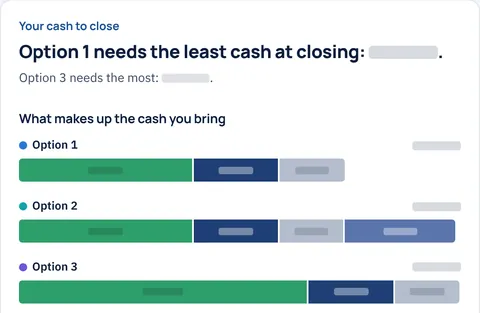
Cash to close is the money you bring to closing. It has three parts, minus any credits:
- Down payment: becomes your equity on day one.
- Closing costs: what the lender, appraiser, title company and county charge.
- Prepaids and escrow: your own bills paid ahead, such as the first year of homeowner's insurance, interest for the rest of the closing month and a starting balance in your escrow account.
Then subtract what has already been paid or credited: your earnest money deposit, seller credits, lender credits, and any gift or assistance sent straight to closing.
The money has to be documented. Lenders usually ask for two months of statements for the account it comes from, and an explanation of large deposits. You will usually pay by wire or cashier's check. Ask the title company which it accepts.
Before you wire money: we will never change wire instructions by email. Call the title company at the number on your contract first.
Colorado property taxes are paid a year behind, so this year's taxes are due next spring. At closing, the seller usually credits you for their share of the current year, and the lender collects a few months into escrow. Assistance from CHFA or from HomesFund in Montezuma, La Plata, Archuleta, Dolores and San Juan counties can also lower cash to close. It is usually a loan secured by a second lien, repaid when you sell or refinance, and only sometimes a grant. We show your cash to close with and without it before you apply.
Go deeper
Seller credits and their limits
A seller credit pays closing costs and prepaids for you. It cannot pay your down payment or exceed your actual costs, and each loan type caps it:
| Loan | Seller can pay up to |
|---|---|
| Conventional, primary or second home | 3% with less than 10% down; 6% with 10% up to 25% down; 9% with 25% or more down |
| Conventional, investment property | 2% |
| FHA | 6% of the price |
| VA | 4% in concessions; paying your normal closing costs does not count toward it |
| USDA | 6% of the price |
Conventional limits are figured on the lower of the price or the appraised value.
Prepaids, escrow and your closing date
Mortgage interest is paid a month behind. At closing you prepay interest from your closing day through the end of that month, and your first payment is usually due on the first of the month after next. For example, if you close in October, the first payment is usually due December 1.
Closing late in the month means less prepaid interest and a smaller cash to close. It does not lower your total cost, because you pay that interest either way.
Your escrow account starts with a deposit so there is enough when tax and insurance bills come due. Federal rules cap the extra cushion at two months of escrow payments.
Gifts and down payment help
Gifts from family can cover much or all of your cash to close on most loans. Expect a signed gift letter stating that the money does not have to be repaid, and a paper trail showing it moving from the giver's account to yours or to the title company.
Down payment assistance is usually a second loan, secured by a lien on the home, and sometimes a grant. CHFA offers a grant of up to 3% or a deferred second loan of up to 4%, each capped at $25,000, and the second is repaid when you sell or refinance. Assistance can come with a higher rate or other costs, so compare the total cost before you choose it.
See it with your numbers
Your Mortgage Plan shows each option's cash to close, with a breakdown in whole dollars that add up exactly.
Already have a Mortgage Plan? Open your link, or text Daniel.
Back in your Mortgage Plan, see this with your own numbers.