
Your first year as an owner
The short version
A fixed rate means your principal and interest never change. Your total payment still can, because most payments also cover property taxes and homeowners insurance through an escrow account.
- Escrow analysis: once a year your servicer compares what it collected with what it paid out. A shortage raises your payment. A surplus of $50 or more comes back to you.
- Your servicer may change: it is common for another company to take over your loan. You will get notices from both, and your loan terms stay the same.
- Keep records: your Closing Disclosure, deed, title policy and receipts for improvements.
- Budget for upkeep: a common rule of thumb is about 1% of the home's value each year.
Read each escrow statement when it arrives. If something looks wrong, call the number on your monthly statement.
Colorado property taxes are paid a year behind. Each year's bill is mailed in January of the next year, with half due at the end of February and half by June 15, or all of it by April 30. At closing, the seller credits you for their share, and your escrow pays the full bill the next spring. Counties revalue homes every odd-numbered year, so expect your escrow to adjust after each one. A newly built home may be taxed as it stood on January 1, sometimes as land only, so the second bill can be much higher.
Go deeper
How escrow analysis works
Federal rules let your servicer keep a cushion of up to one-sixth of a year's tax and insurance bills, about two months, in the account. Each year it projects next year's bills and compares them with the account balance.
- Shortage of one month's escrow payment or more: spread over at least 12 months.
- Smaller shortage: the servicer may ask for it within 30 days or spread it out.
- Surplus of $50 or more: refunded within 30 days, if your payments are current.
Most servicers let you pay a shortage in one lump sum to keep the monthly payment lower. Your new payment still reflects the higher bills going forward.
Servicing transfers and mail to ignore
When your loan moves to a new servicer, the old one must notify you at least 15 days before the change and the new one within 15 days after. For 60 days, a payment you send to the old servicer on time cannot be treated as late.
Scammers copy these letters. Before you send money anywhere new, confirm using the phone number on a statement you already have, not one from the letter.
You will also receive official-looking mail offering a "certified copy" of your deed for a fee, or insurance tied to your new mortgage. You can get a copy of your deed from the county clerk and recorder, and you do not have to buy anything you did not request.
Records worth keeping
- Closing Disclosure: your purchase price and costs, which set your starting cost basis.
- Improvement receipts: a new roof, an addition, a well or septic replacement. The IRS adds qualifying improvements to your basis, which can lower taxable gain when you sell.
- Form 1098: sent each January, showing mortgage interest paid. It matters only if you itemize.
- Insurance policy: review it at each renewal, especially the rebuild amount if you are in a wildfire area.
Ask a tax professional how these apply to you.
Upkeep in this climate
Rural homes have systems that homes in town do not. Here is what to plan for:
- Septic: the EPA suggests an inspection at least every three years and pumping every three to five.
- Well: pumps and pressure tanks wear out. Test the water each year if you can.
- Roof and gutters: heavy snow and spring melt find weak spots.
- Wildfire space: keep the first five feet around the house clear, and thin brush each year.
- Heat: service the furnace, and have wood stoves and chimneys cleaned.
See it with your numbers
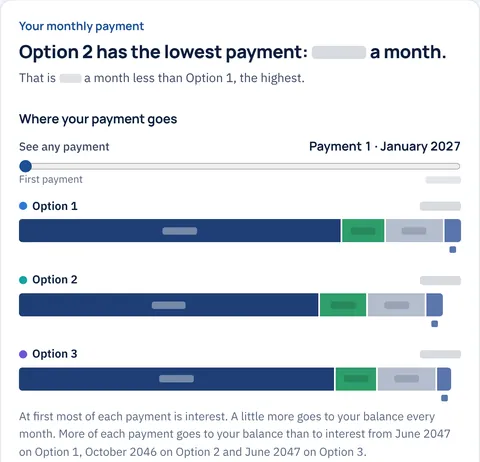
The payment breakdown in your Mortgage Plan shows the tax, insurance and mortgage insurance parts of each option, so you know which can change.
Already have a Mortgage Plan? Open your link, or text Daniel.
Back in your Mortgage Plan, see this with your own numbers.
Your next step
Lesson 2 of 8 in OwningPaying extra on your mortgageExtra mortgage payments go straight to principal, so they cut interest and shorten the loan. Extra paid early in the loan saves the most.Read the lessonSources
- CFPB: Regulation X, escrow accounts (1024.17)
- CFPB: Regulation X, servicing transfers (1024.33)
- CFPB: what is an escrow account?
- Montezuma County Treasurer: property tax due dates
- San Juan County, Colorado: reappraisal and appeals
- IRS Publication 523: selling your home
- EPA: how to care for your septic system