
Becoming an investor
The short version
Most people start investing in real estate one of three ways:
- House hack: buy a 2 to 4 unit home, live in one unit and rent the others. You get owner-occupied terms: no down payment with VA if you are eligible, which is often the strongest option, 3.5% down with FHA, or 5% with a conventional loan.
- Keep your current home: move, and rent out the place you are leaving.
- Buy a rental: a conventional investment loan with at least 15% down on one unit or 25% on two to four, or a DSCR loan that qualifies on the property's rent.
Two things decide how far you can go: how lenders count the rent, and how much cash you have left over. Lenders usually count 75% of the rent to allow for vacancy and upkeep. Under Fannie Mae's rules, with less than 12 months of landlord experience, rent may only offset that property's own payment.
Owner-occupied loans expect you to move in within 60 days and live there for at least a year, so plan accordingly.
Rents and rules vary widely from town to town in our area. Short-term rentals are regulated in many places, including Durango, La Plata County and Telluride, and the rules change. Check them for the exact address before you count on that income, and rely on an appraiser's rent estimate rather than a number from a website.
Go deeper
House hacking a 2 to 4 unit
- VA: up to four units with no down payment and no monthly mortgage insurance, if you live in one unit and have full entitlement. For eligible veterans, this is often the strongest way to start.
- FHA: 3.5% down if you live in one unit. Three- and four-unit homes must pass a self-sufficiency test: 75% of the appraiser's rent for all units, including yours, must cover the full payment. You will also need three months of payments in reserve.
- Conventional: Fannie Mae allows 5% down on a 2 to 4 unit home you live in, with six months of payments in reserve.
Loan limits are higher for 2 to 4 units. An accessory unit counts too: Fannie Mae and FHA can count rent from one on a single-unit home, generally capped at 30% of your qualifying income.
Keeping your current home as a rental
Fannie Mae updated these rules in September 2026, required for applications from November 1, 2026:
- Rent comes from an appraiser's rent schedule or a market analysis with at least three comparable rentals. A lease is not used for the home you are leaving.
- The lender takes 75% of the rent, minus that home's full payment. A positive result can only offset that payment. A negative one counts as debt.
- With less than 12 months of landlord experience, you need six months of that home's payment in reserve, on top of other reserves.
FHA is stricter: rent from the home you are leaving counts only if you are moving more than 100 miles away. Without a landlord history, you also need at least 25% equity and a signed one-year lease. Many buyers simply qualify while carrying both payments.
Rental purchases and reserves
- Down payment: at least 15% on a one-unit rental and 25% on two to four units, with a conventional loan.
- Seller credits: capped at 2% on investment property.
- Reserves: six months of the rental's payment, plus 2% of the balances on your other financed properties (4% with five or six, 6% with seven to ten). Your own home and the one you are buying do not count toward that total.
- Limit: up to 10 financed properties with automated approval.
Investment loans price higher than owner-occupied ones. Fannie Mae counts short-term rental income only on a legally permitted one-unit rental, at 50% of market rent, and only to offset its payment.
When a DSCR loan fits
A DSCR loan qualifies on the property's rent compared with its full payment, not on your tax returns. It can fit when your returns show less income than you earn, when you have reached the conventional property limit, or when you want to own through an LLC.
The trade-offs include higher rates and costs, larger down payments, reserves, and often a prepayment penalty for the first few years. Each lender sets its own minimum ratio. Compare a DSCR offer with a conventional one before you choose.
See it with your numbers
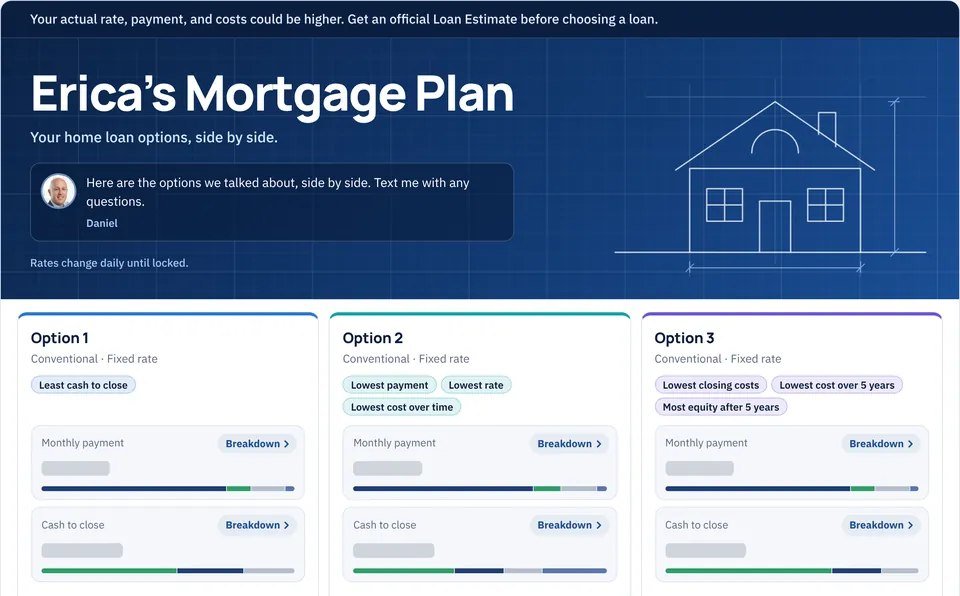
Your Mortgage Plan shows the qualifying ratios (DTI) for each option, so you can see how rent and a second payment change what you qualify for.
Already have a Mortgage Plan? Open your link, or text Daniel.
Back in your Mortgage Plan, see this with your own numbers.
Your next step
Stage 2: What can I get?DSCR loans for rental propertyA DSCR loan qualifies a rental on its rent, not your income. Rent divided by the full payment gives the ratio, and many lenders want 1.0 or more.Read the lessonOr go another way: Use my equity and keep my low rate
Sources
- Fannie Mae Selling Guide: general rental income
- Fannie Mae Selling Guide: rental income from the subject property
- Fannie Mae Selling Guide: short-term rental income
- Fannie Mae Selling Guide: departing residence
- Fannie Mae: Selling Guide announcement SEL-2026-08
- Fannie Mae Selling Guide: minimum reserve requirements
- Fannie Mae Selling Guide: multiple financed properties
- Fannie Mae Eligibility Matrix
- Fannie Mae Selling Guide: interested party contributions
- HUD Mortgagee Letter 2023-17: FHA rental income