Locking your rate
The short version
Mortgage rates tend to follow the bond market, so they can move every day with the news: inflation, jobs reports, the Federal Reserve and events around the world. Good news for the economy often means higher rates, and bad news lower ones, but surprises happen both ways. Nobody can time it, and that includes us.
When you can lock. For a purchase, a rate can be locked once there is an accepted contract on a home, your application documents are in, your credit has been pulled, and the loan is structured and approved through automated underwriting. For a refinance, it is the same without the contract. Some lenders offer a lock while you shop, before there is a contract. It is expensive, and we can show you its cost in your Mortgage Plan.
Waiting for a better rate is a bet. Locking when the numbers work is a decision.
How we lock. When you are ready and the numbers look right, we lock. We will tell you what is moving the market. We will not tell you where it is going.
A rate lock is the lender's promise to hold your rate, points and lender credits until a set date, as long as you close by then and your application does not change. Locks commonly run 30, 45 or 60 days. Longer locks usually cost somewhat more, so the right lock is the shortest one that safely covers your closing date.
After the lock. The lender sends a revised Loan Estimate within three business days, and page 1 shows the lock and when it ends. From then on, the work is to close before that date. A locked rate can still change if your file changes: a different loan amount or down payment, an appraisal that comes in high or low, a credit change, or income that cannot be documented.
Rural files often need more time. Appraisers covering acreage, wells and septic, or one-of-a-kind homes can take longer to schedule, and water tests, septic inspections and surveys add days. In building season, contractors and inspectors are often fully booked. It is better to build that cushion into your lock than to pay for an extension later.
Go deeper
Choosing a lock period
Start from the closing date in your contract and count back. Then add a cushion for the steps that can run long: the appraisal and any repairs it calls for, inspections, title work and HOA documents.
A purchase lock is usually tied to a specific property, so it starts once you are under contract and the other steps above are done. Some lenders offer a lock while you shop, before you have a contract. It is expensive; if you want to weigh it, we can show what it would cost in your Mortgage Plan.
A lock that is slightly too short can cost more than a longer one once you add an extension. Ask the price of both before you choose.
Extensions and expired locks
If closing slips past your lock date, most lenders will extend the lock for a fee, often quoted as a fraction of a point for a set number of days. Your Loan Estimate will not show extension costs, so ask before you lock, and ask who pays if the delay is the lender's fault.
If a lock expires, you will need to relock. Many lenders relock at the worse of your original pricing or today's market. Policies vary, so get the policy in writing.
Float-downs
A float-down lets you lower a locked rate if the market improves before closing. Terms vary widely:
- Rates must fall by a set amount first.
- You can use it once, often only within a window before closing.
- It may cost a fee or slightly higher pricing up front.
A float-down works like insurance. It is worth it only when the cost is small compared with the savings you would realistically see.
New construction and renovation
New builds and large renovations can take months, longer than a standard lock. You have two choices: an extended lock, which costs more because the lender carries the risk longer, or floating and locking closer to completion.
An extended lock protects your budget if rates rise during the build. Floating keeps the cost down if they do not. Ask for both prices in writing, and weigh them against how much a rate rise would strain your budget.
See it with your numbers
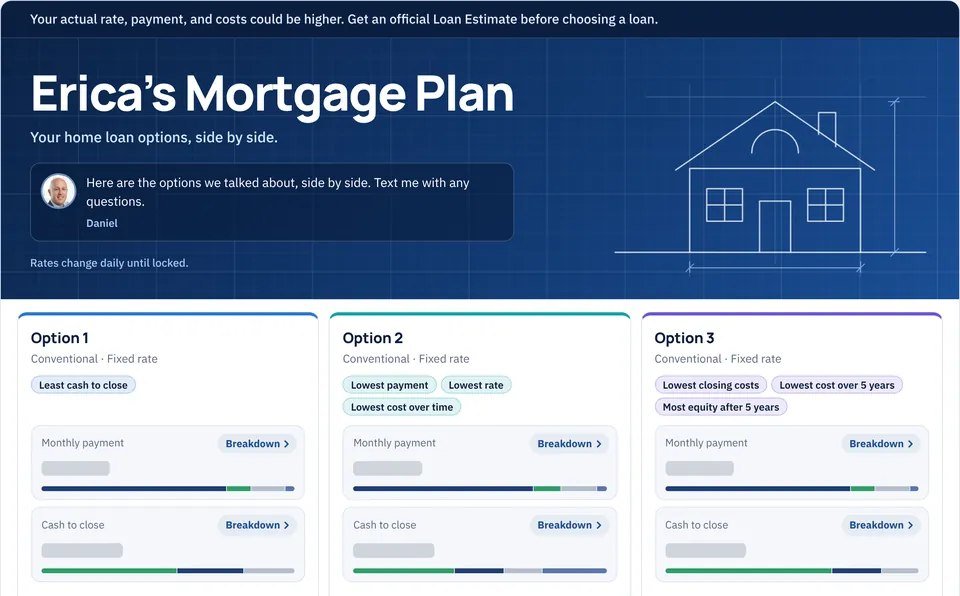
Your Mortgage Plan shows how each option's payment would change if the rate moves before you lock.
Back in your Mortgage Plan, see this with your own numbers.